


Why are some gemstones so much more expensive than others?
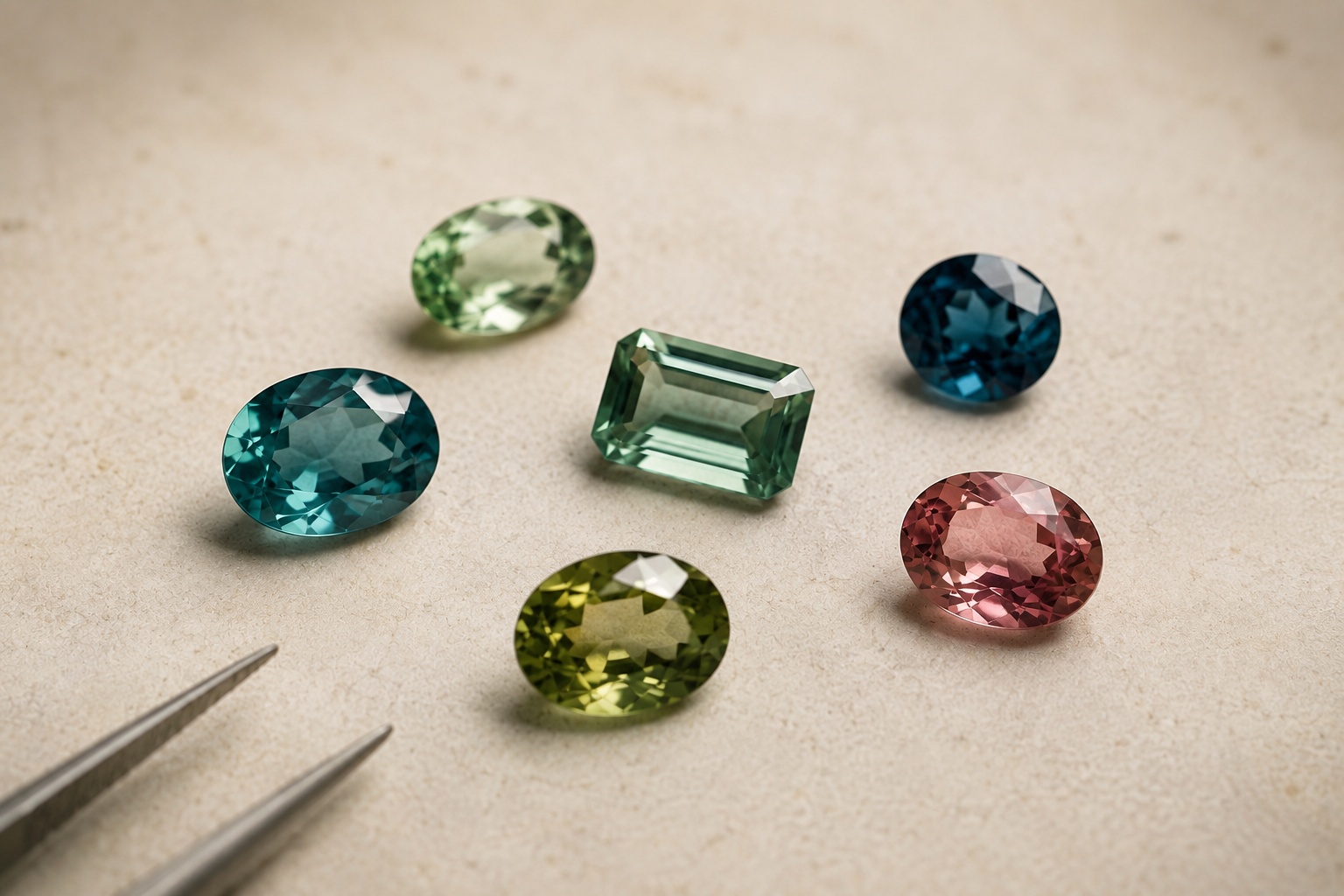
When you compare different gemstones side by side, the price difference can sometimes be quite significant. Two stones can be roughly the same size yet differ in price by hundreds of euros.
I also regularly encounter these differences when purchasing gemstones for my jewelry. A stone that seems similar at first glance can suddenly have a very different price tag.
That almost never comes down to a single factor. The type of gemstone plays a role, but so do color, clarity, size, cut quality, any treatments it may have undergone, and—above all—how easy it is to find a particular stone.
Not all gemstones are the same
For example, a 7 x 5 mm sapphire can cost a completely different price than a tourmaline of exactly the same size.
One reason for this is that some gemstones are rarer than others, and demand for certain types is higher. But even within a single type of gemstone, there are significant differences in quality and rarity.
So simply looking at the dimensions actually tells us very little about a stone’s ultimate value.
Color can make a big difference
Color is one of the most important factors in determining the value of many colored gemstones.
It’s not just about the color of a stone, but also about the exact shade, intensity, and distribution of that color. Some colors are rarer or more sought-after than others, and that can have a significant impact on the price.
When it comes to my own jewelry, I often look for colors that you don’t see very often. I don’t just consider which color is considered the most valuable by the market. Above all, I think it’s important that a stone has a beautiful, unique look and fits well with my designs.
Clarity and natural inclusions
Natural gemstones may contain small inclusions. These are features that formed during the stone’s formation.
For some types of gemstones, a very clear specimen is more highly valued, while for others, inclusions are preferred. The extent to which they affect the price varies by gemstone.
Furthermore, a small natural inclusion doesn’t necessarily make a stone any less beautiful. What’s more important is whether it affects the stone’s appearance or durability. Especially when it comes to a gemstone set in a ring, that’s something I always look for.
A larger size can also mean a higher price per carat
With many gemstones, high-quality specimens become harder to find as the size increases. As a result, not only can the total price rise, but so can the price per carat.
However, this isn’t a hard-and-fast rule for every gemstone. The extent to which size affects the price depends, among other things, on the type of stone, its quality, and how rare larger specimens of that type are.
So the format alone never tells the whole story.
The grinding residue counts, too
The way a gemstone is cut has a significant impact on its final appearance. Among other things, the proportions and facets determine how light travels through the stone and how beautifully its color and brilliance are showcased.
That’s why grinding isn’t just about preserving as much of the raw material as possible. Sometimes, in fact, more material needs to be ground away in order to end up with a more beautiful stone.
That is why the quality of the cut is also reflected in the value of a gemstone.
Treated or untreated
Some gemstones are treated to enhance their color or clarity, for example. That doesn’t have to be a problem at all. For certain types of gemstones, some treatments are even quite common.
It can indeed affect the value. An untreated stone of exceptional quality may be much rarer—and therefore more expensive—than a comparable treated stone.
Sometimes it’s just hard to find exactly the right stone
Ultimately, many of these factors come together to determine availability.
Finding a beautiful green gemstone, for example, doesn’t have to be that difficult. But what if you’re looking for a specific shade of green, in a certain size and cut, and of good quality? Then the selection suddenly becomes a lot smaller.
I notice this all the time when I’m sourcing pieces for my own collection or when I’m looking for a specific stone for a client. Sometimes I find exactly the right stone right away. Other times, it can take weeks before I come across something whose color and appearance are just right.
It’s precisely those less common colors that aren’t always available whenever you want them. And if a certain combination of color, quality, and size is in short supply, that can also affect the price.
The most expensive stone isn’t necessarily the most beautiful
So there are all kinds of characteristics that determine why one gemstone is more expensive than another. But ultimately, they don’t tell you which one you’ll find the most beautiful.
On paper, a stone may appear rarer, clearer, and more valuable, while you yourself may be much more drawn to a different color or appearance.
The same goes for when I select gemstones. Of course, I look at quality, cut, and whether a stone is suitable for the piece of jewelry it will be set in. But after that, I mainly have to find it beautiful.
After all, you don’t choose a gemstone because of its price tag, but because it’s the one you can’t stop looking at.